

Introduction
Mehendi design breathes life into celebrations, weddings, and festivals with intricate henna art that tells a cultural story. Whether you want bridal mehendi or a minimal mehendi design for a party, this guide walks you through styles, application, care, and creative tips to make your designs stand out.
Understanding mehendi design: history and heart
Mehendi design has roots in ancient traditions where henna art symbolized joy, protection, and beauty. Bridal mehendi grew into an entire ritual, blending floral patterns, paisley motifs, and cultural symbols. Today, designers mix classic traditional mehendi with contemporary touches like negative space design and Indo-Arabic design to create looks that feel fresh and personal.
Popular mehendi design styles (What are the most popular mehendi design styles?)
-
Arabic mehendi: Bold lines, floral trails, and open spaces that suit minimalists.
-
Bridal mehendi: Dense, full-hand coverage with portraits, paisleys, and storytelling motifs.
-
Moroccan mehendi: Geometric patterns, lattice work, and tribal accents.
-
Indo-Arabic design: A fusion of Indian intricacy and Arabic flow.
-
Minimal mehendi / finger-tip designs: Tiny motifs focused on hands and fingers for casual wear.
Each style maps to occasions: festival mehendi often favors lighter, joyful patterns, while bridal mehendi leans heavy and ornate.
Tools and ingredients for flawless henna application
To execute a crisp mehendi design, gather:
-
Mehendi cone (good quality, fine nozzle)
-
Natural henna paste (freshly mixed for best stain)
-
Applicator bottles or traditional cones for steady lines
-
Toothpicks for micro-corrections
-
Lemon-sugar solution to seal designs
-
Cooling oil after mehendi (to moisturize and deepen color)
A quality mehendi cone and paste directly affect line sharpness and stain longevity — invest time in preparing or sourcing reliable henna.
How to make natural henna paste at home (Can I make natural henna paste at home for mehendi design?)
Yes. A basic henna paste recipe includes sieved henna powder, lemon juice, essential oils (like eucalyptus), and sugar to bind. Rest the mix for 6–12 hours for dye release. Strain again before filling your mehendi cone for smooth application. Homemade paste often stains richer because it lacks preservatives.
Short recipe:
-
100g henna powder (sifted)
-
Lemon juice to make a thick paste
-
1–2 tsp sugar + a few drops of eucalyptus oil
-
Rest and strain before use
Techniques for clean lines and modern flair
-
Steady hand practice: Draw continuous loops and keep the cone tip barely touching skin.
-
Layering motifs: Start with central floral patterns, then add paisley and lace fills.
-
Negative space design: Leave intentional gaps to make patterns pop.
-
Finger motifs: Small dots, lines, and leaflets create elegance on tips.
-
Blending styles: Try Indo-Arabic design — Indian density with Arabic flow — for unique bridal mehendi.
Practice on paper or a ball of foam. Over time, your hand will learn pressure control and rhythm.
Timings and mehendi stain longevity (How long does mehendi stain last and how to make it darker?)
Mehendi design stain typically lasts 7–21 days depending on skin type, paste quality, and aftercare. For a darker stain:
-
Keep paste on for 6–12 hours (overnight is common).
-
Apply lemon-sugar seal to keep paste moist and help dye absorption.
-
Avoid washing with soap for 24 hours post-removal; use oils instead.
-
Heat and steam can deepen the color — natural body heat often does the trick.
Remember: palms stain darker than the back of hands. For brides, a darker mehendi is often associated with affection and good fortune — a charming cultural note.
Aftercare: protect and prolong your mehendi design (How do I care for my mehendi after application?)
-
Leave paste on for several hours; scrape off — don’t wash immediately.
-
Apply natural oils (coconut, olive) to protect the stain.
-
Avoid chlorinated pools and heavy exfoliation.
-
Moisturize regularly to prevent early fading.
-
Use gloves during dishwashing or harsh cleaning.
Consistent, gentle care is the best path to longer-lasting mehendi design.
Safety: are mehendi designs safe during pregnancy? (Are mehendi designs safe during pregnancy?)
Natural henna is generally safe during pregnancy when it’s pure and free from chemical additives. However:
-
Avoid “black henna” or products containing PPD (paraphenylenediamine) — these can cause allergic reactions.
-
Test a small patch beforehand if you have sensitive skin.
-
Consult your healthcare provider if uncertain.
Natural henna, made from Lawsonia inermis, has been used for centuries with minimal issues when pure.
Top 10 mehendi design styles in the world
Here are ten standout mehendi design variations that are popular globally. Use this as inspiration to explore whether you like floral extravagance, geometric simplicity, or somewhere in between.
Arabic Floral Trail – Flowing vine-style motifs, open spaces, large flower centres.
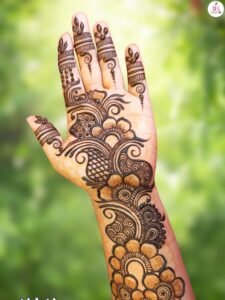
Bridal Full Hand Intricate – Dense with motifs, peacocks, paisleys; covers palm to wrist and forearm.
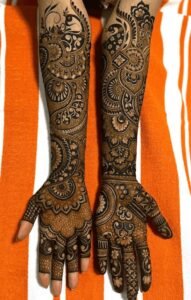
Moroccan Geometric Lattice – Bold patterns, strong negative space, and symmetry.
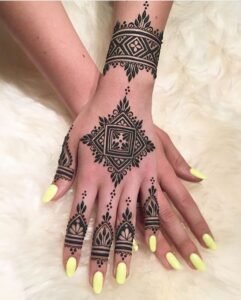
Minimal Finger-Tip Accents – Simple designs on fingers with clean lines and few fills.
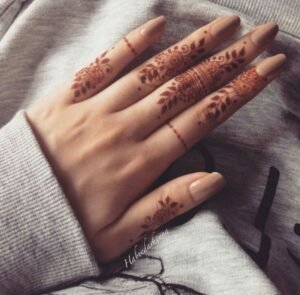
Traditional Indian Paisley & Peacock – Rich cultural motifs; classic bride favourite.
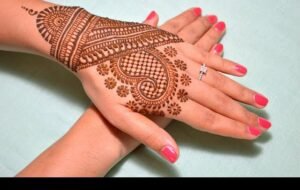
Half-Hand Modern Fusion – Only half the hand is filled; trendy for younger brides.
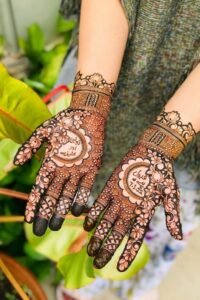
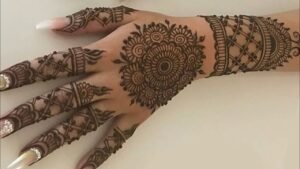
Mandala Centrepiece Design – Circular motif on palm with radiating details; artistic and balanced.
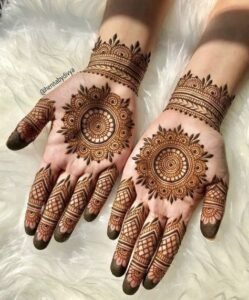
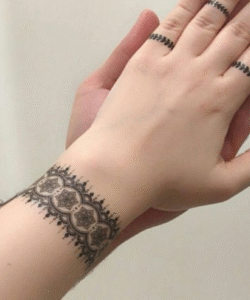
Lace Wrist Band Design – Looks almost like jewellery; delicate lace patterns across wrist.
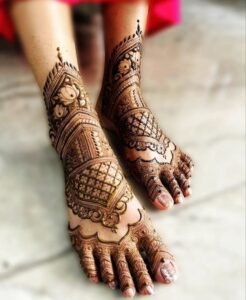
Foot & Leg Mehendi Design – Extends beyond hand; bridal feet mehendi is rising in appeal.
Festival Casual Back-Hand Design – Quick to apply, looks elegant for festive occasions without full-hand commitment.
Styling tips for different occasions
-
Bridal mehendi: Add hidden motifs (initials, date) and full-hand coverage for dramatic effect.
-
Festival mehendi: Choose lighter floral patterns and finger motifs for quick application.
-
Office-friendly mehendi: Minimal mehendi design with wrist bands and simple fingertip dots.
-
Party looks: Combine metallic temporary tattoos with mehendi for a modern twist.
These styling choices help the same mehendi artist adapt to different client needs.
Top 5 Best Mehendi in the World
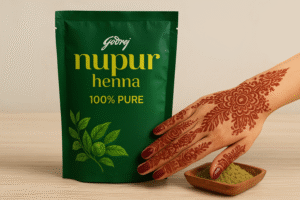
Godrej Nupur Henna
Godrej Nupur Henna is one of the most trusted mehendi powders worldwide. Made from 100% pure Lawsonia inermis leaves blended with natural herbs like amla, brahmi, and shikakai, it gives a deep, long-lasting reddish-brown stain. Perfect for both hair and hand application, it’s chemical-free and gentle on skin — a favorite for brides and professionals alike.
Jamila Henna (Pakistan)
Jamila Henna is world-famous for its ultra-fine texture and vibrant color release. Originating from Pakistan, it’s exported globally and loved by mehendi artists for its silky-smooth consistency. When mixed with lemon juice and essential oils, Jamila delivers one of the richest maroon-brown stains you can get naturally.
Rajasthani Sojat Mehendi
Sojat, Rajasthan, is India’s heart of henna cultivation. Its naturally high dye content makes Sojat Mehendi one of the most potent and vibrant in the world. Pure Rajasthani Sojat powder is used by many premium brands. It produces a dark, long-lasting stain ideal for bridal ceremonies and cultural festivals.
H&C 100% Natural Henna Powder
H&C Henna Powder is popular among global users who prefer DIY mehendi. It’s triple-sifted, vegan, and completely chemical-free. Known for its earthy aroma and smooth texture, H&C’s mehendi provides even coverage and strong pigmentation — perfect for both beginners and experienced artists.
Herbul Hair & Hand Henna
Herbul’s henna range caters to users who want both body art and hair color benefits. It’s infused with natural conditioners and gives a uniform stain with a warm tone. Easy to mix, quick to apply, and safe for sensitive skin, Herbul Henna stands out for its quality and fragrance.
Choosing a mehendi artist and where to find inspiration
Search platforms like Pinterest and Instagram for designers and portfolios. Look for:
-
Clear, well-defined lines in photos.
-
Variety of styles (Arabic, Moroccan, Bridal).
-
Client testimonials and recent work.
A skilled mehendi artist will adapt patterns to hand shape and event tone.
Quick practice drills for beginners
-
Draw straight lines, then curves until your hand steadies.
-
Practice paisley motifs repeatedly; they’re the backbone of many designs.
-
Create 3 variations of a finger-tip design to build a go-to set.
-
Time yourself — speed improves with repetition.
Small daily sessions beat long infrequent practices.
Conclusion
Mehendi design blends personal expression with tradition — from delicate finger motifs to full-hand bridal mehendi. With the right mehendi cone, natural henna paste, and aftercare, anyone can achieve striking results. Try a simple floral or paisley today, practice steady lines, and share your progress with a trusted mehendi artist or on social platforms for feedback. Ready to create your next mehendi design? Pick a small motif, make fresh paste, and start practicing — beauty grows with patience.
Also Read: Felixing: The Secret Habit That Transforms Everyday Happiness
FAQ (answers to the PAA questions)
What are the most popular mehendi design styles?
Arabic mehendi, bridal mehendi, Moroccan mehendi, Indo-Arabic fusion, and minimal fingertip designs are among the most popular.
How long does mehendi stain last and how to make it darker?
Stain lasts 7–21 days; longer with quality paste, longer paste-on time, lemon-sugar seal, and oil aftercare.
Can I make natural henna paste at home for mehendi design?
Yes. Use sifted henna powder, lemon juice, sugar, and essential oil. Rest the mix 6–12 hours for dye release.
How do I care for my mehendi after application?
Leave paste on long, seal with lemon-sugar, oil after scraping, avoid soaps and exfoliation for 24–48 hours.
Are mehendi designs safe during pregnancy?
Pure natural henna is generally safe; avoid black henna and PPD-containing products. Patch-test if concerned.