
Introduction
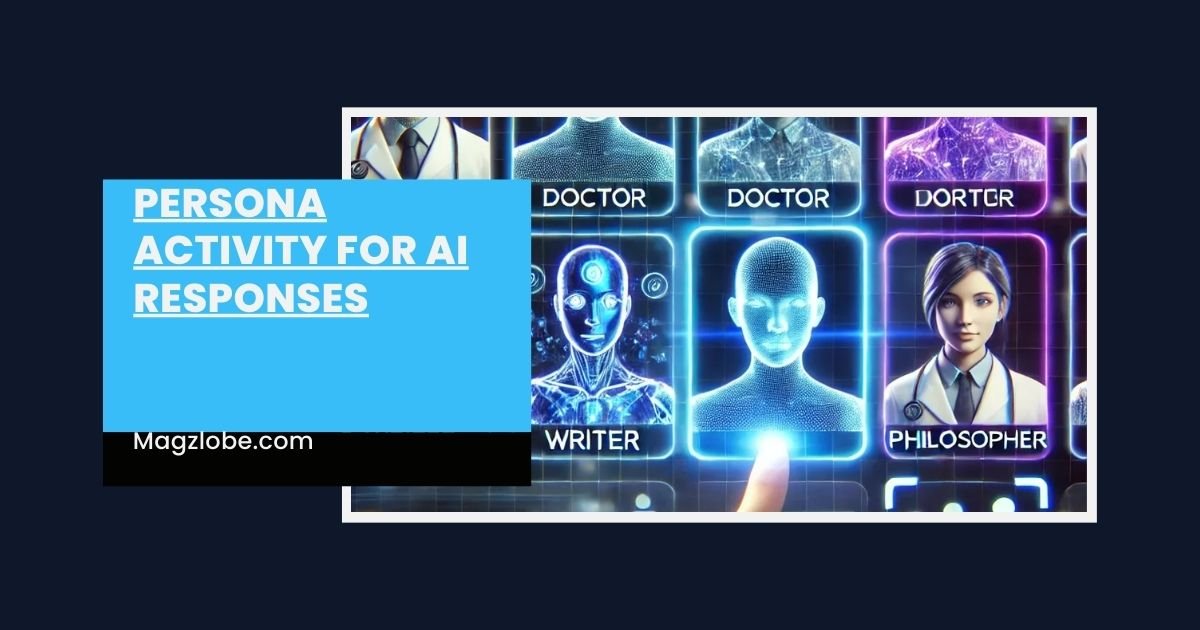
The idea of persona activity for AI responses has become essential for anyone building conversational agents. As users expect warmth, clarity, and consistency, an AI must behave like a character with a defined voice—not a machine throwing random answers. By understanding persona activity and how it shapes communication, we can design AI interactions that feel natural, human-like, and deeply aligned with user expectations.
Why Persona Activity Matters in Conversational AI
Persona activity sets the blueprint for how an AI responds, reacts, and behaves. Without it, even the smartest model—like ChatGPT or IBM Watson—can produce inconsistent, confusing, or off-brand replies. With it, the AI becomes reliable, emotionally aware, and easier for users to trust.
Imagine talking to a customer support bot that sounds warm in one message and robotic in the next. That inconsistency breaks the experience. Persona activity prevents this by defining how the AI communicates, not just what it says.
What Persona Activity Means in AI Communication
Persona activity for AI responses refers to the behavioral rules, tone, personality traits, and communication patterns that shape how an AI engages with people. Think of it as the “character bible” for your assistant.
Key elements include:
-
tone of voice (playful, formal, empathetic)
-
sentence style and rhythm
-
level of detail
-
emotional response rules
-
boundaries for refusals
-
domain expertise and limitations
-
how context changes behavior
This foundation ensures the AI behaves like the same personality in every conversation.
How Persona Design Works (Step-by-Step)
Creating persona activity for AI responses isn’t guesswork. It follows a clear structure.
1. Understand your users
Great personas start with audience research. Identify what tone aligns with your users:
-
friendly vs. professional
-
concise vs. detailed
-
playful vs. serious
A travel assistant might be cheerful, while a financial advisor bot should be calm and authoritative.
2. Build a one-page persona profile
This brief includes:
-
persona identity
-
communication rules
-
emotional tone
-
greeting/closing style
-
words to prefer/avoid
-
refusal rules
This document becomes the AI’s “voice blueprint.”
3. Create intent-specific behaviors
Link persona to scenarios:
Example:
If a user expresses frustration → AI responds with empathy + clarity.
If a user asks a technical question → AI focuses on precision and calm tone.
4. Add contextual tone switching
Human conversation shifts tone. With sentiment analysis—supported by platforms like Hugging Face or Microsoft Azure AI—the AI can adjust warmth or urgency responsibly without losing persona consistency.
Semantic AI Behavior and NLP Patterns
AI personas rely on consistent NLP behavior structures:
Tone consistency
A persona must feel the same across every dialogue.
Conversational flow rules
These guide when the AI asks clarification, when it offers alternatives, and how it structures answers.
Sentiment-aware responses
Tools like Google Dialogflow or Character.ai help models adapt emotionally appropriate replies.
Narrative style
Some assistants tell short stories; others keep information factual. The persona defines this.
Tools That Help Build Persona Activity
Many modern AI platforms support persona-driven configuration:
-
OpenAI / ChatGPT – system prompts for persistent persona rules
-
Rasa – rule-based dialogue with personality tuning
-
Google Dialogflow – intent-driven persona tone settings
-
Amazon Alexa – skill-specific voice traits
-
Replika – advanced personality learning models
Each of these tools helps reinforce persona behavior across various conversation types.
Story: When Persona Saved a Failing AI Product
A SaaS startup launched an AI assistant for onboarding. Early feedback was brutal:
-
The AI was inconsistent
-
Tone switched between robotic and overly casual
-
Users thought it sounded “confused”
The team implemented structured persona activity for AI responses:
-
Defined a friendly but expert voice
-
Added empathy rules
-
Introduced a narrative style
-
Implemented consistency filters
-
Tuned AI using OpenAI-based system messages
Within 60 days:
Satisfaction increased 27%
Support tickets dropped
AI engagement doubled
Persona activity wasn’t cosmetic—it transformed user trust.
Balancing Personality and Professionalism
A persona must be engaging but not distracting. Here’s the balance:
-
Too much personality → poor credibility
-
Too little personality → robotic experience
Using structured guidelines, sentiment scoring, and tone constraints, teams can maintain warmth without losing expertise.
Common Components of Strong Persona Activity
Behavior guidelines
How the AI reacts to confusion, criticism, or negative sentiment.
Role boundaries
Avoid speculation, personal opinions, or unsafe topics.
Tone rules
Sentence length, use of emojis, humor thresholds.
Interaction patterns
How the AI asks questions, clarifies, or wraps up.
Consistency filters
Rules to catch responses that do not match the persona.
Case Study: Persona in Healthcare AI
Healthcare AI requires empathy without over-emotional expression. Systems like IBM Watson and Azure AI enforce:
-
calm tone
-
clear disclaimers
-
structured explanations
Persona activity ensures no message sounds careless—critical in sensitive fields.
Advanced Methods for Persona Activity
1. Emotion-adaptive personas
AI adjusts tone based on sentiment analysis without breaking identity.
2. Multimodal persona alignment
When using voice or avatars, persona must match tone and visual cues.
3. Role-specific micro-personas
Large organizations create multiple micro-personas:
-
support bot
-
sales bot
-
onboarding bot
Each with its own blueprint.
4. AI-persona memory models
Long-term persona persistence ensures users feel continuity across sessions.
Testing Persona Consistency
How to test it:
-
Run persona drift audits
-
Use scenario testing with human evaluators
-
Check tone alignment using NLP classifiers
-
Perform A/B comparisons between persona versions
-
Review user satisfaction with each persona variant
Without continuous testing, persona activity weakens over time.
Bullet List: Quick Implementation Steps
-
Build a persona profile (1 page)
-
Define tone rules
-
Add structured refusal patterns
-
Create sentiment-aware adjustments
-
Conduct persona drift audits weekly
-
Map persona to top 50 user intents
-
Test consistency using multiple entities (OpenAI, Rasa, Dialogflow)
Conclusion
Persona activity for AI responses is the foundation of human-like communication. When an assistant has a clear voice, tone, and behavioral blueprint, it becomes not just a tool—but a reliable conversational partner. Start building your persona today, refine it with user feedback, and watch your AI transform into a consistent, trustworthy digital personality.
Also Read: A Complete Guide to Using Google, Facebook, Instagram, WhatsApp & Medium
FAQ
1. What is persona activity for AI responses?
It refers to the behavioral, tone, and personality rules that guide how an AI communicates, ensuring consistency and user trust.
2. How do personas improve chatbot accuracy?
They reduce randomness, improve tone clarity, and help the AI choose the most appropriate response method.
3. What tools help create AI personas?
Platforms like OpenAI, Rasa, Dialogflow, Replika, and Hugging Face provide persona-based tuning features.
4. How can I make AI responses more human-like?
Use tone rules, empathy patterns, narrative style frameworks, and sentiment-aware adjustments.
5. How do I test if an AI persona is consistent?
Run persona audits, evaluate user transcripts, and use NLP tools to measure drift.
6. Why do brands use persona guidelines for AI?
To maintain consistent brand voice, avoid compliance issues, and create emotionally intelligent experiences.