

Introduction
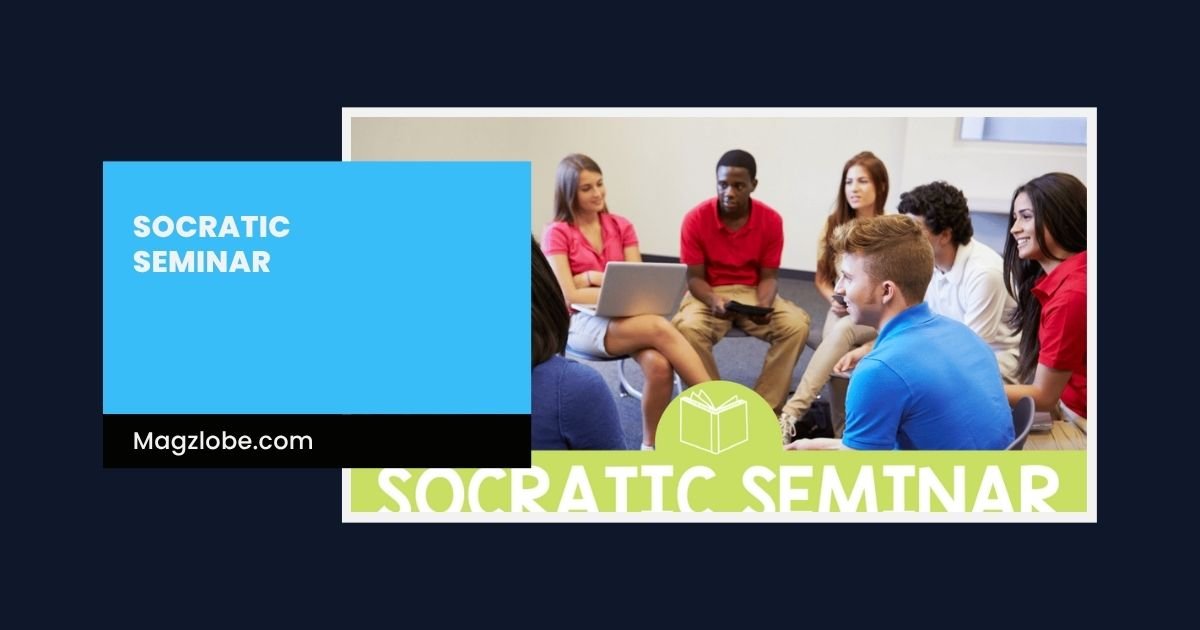
In modern education, fostering critical thinking and collaboration is key. A Socratic Seminar is a powerful tool that encourages students to engage in reflective, dialogue-based learning. By asking open-ended questions and promoting thoughtful discussion, this method transforms classrooms into spaces for intellectual exploration, helping students develop analytical reasoning, communication skills, and deeper understanding of complex ideas.
What is a Socratic Seminar?
A Socratic Seminar is a discussion-centered teaching strategy rooted in the Socratic method, named after Socrates, the classical Greek philosopher. It emphasizes questioning over lecturing, encouraging participants to think critically, challenge assumptions, and explore ideas collaboratively.
Key elements include:
-
Open-ended questions
-
Evidence-based responses
-
Student-led dialogue
-
Reflective thinking
Unlike traditional lectures, a Socratic Seminar transforms learning into an interactive experience, allowing students to take ownership of their intellectual journey.
The Historical Roots of Socratic Seminars
Socratic Seminars draw inspiration from:
-
Socrates: Advocated critical inquiry and questioning assumptions
-
Plato: Documented Socratic dialogues emphasizing reasoning
-
Aristotle: Explored logic and structured thinking, informing modern discussion techniques
These classical philosophers laid the foundation for modern dialogue-based learning used in classrooms worldwide today.
Benefits of Socratic Seminars in the Classroom
-
Enhanced Critical Thinking: Students analyze ideas, identify biases, and construct evidence-based arguments.
-
Improved Communication Skills: Participants articulate thoughts clearly, listen actively, and respond respectfully.
-
Deeper Understanding of Content: Collaborative discussion uncovers multiple perspectives.
-
Student Engagement: Active participation increases motivation and investment in learning.
-
Preparation for Real-World Challenges: Encourages problem-solving, analytical reasoning, and reflective thinking.
Studies from Harvard Graduate School of Education show that students involved in dialogue-based learning demonstrate stronger higher-order thinking skills and retention.
How a Socratic Seminar Works
Teacher Preparation
-
Select a thought-provoking text or topic
-
Develop open-ended questions aligned with Bloom’s Taxonomy
-
Establish clear discussion norms and rubric
Student Preparation
-
Read assigned material critically
-
Note questions, insights, and evidence
-
Reflect on personal perspective
Step 3: Seminar Facilitation
-
Opening Question: Start with a broad, interpretive question
-
Dialogue Flow: Students respond using textual evidence, engage with peers
-
Teacher Role: Facilitate, guide discussion, and encourage deeper reasoning
Step 4: Reflection and Assessment
-
Students self-assess participation
-
Evaluate using discussion rubric
-
Reflect on learning outcomes and critical insights
Tips for Effective Student Participation
-
Active Listening: Focus on peers’ responses before formulating your own.
-
Textual Evidence: Support arguments with facts or examples from reading material.
-
Respectful Engagement: Encourage diverse opinions without interrupting.
-
Ask Clarifying Questions: Deepen understanding by probing further.
-
Reflect: Consider how ideas connect to prior knowledge or real-world contexts.
Socratic Seminar Strategies for Teachers
-
Think-Pair-Share: Encourage individual reflection followed by small group discussion.
-
Fishbowl Technique: Inner circle engages in discussion while outer circle observes and provides feedback.
-
Rotating Roles: Assign roles like facilitator, note-taker, or summarizer.
-
Digital Platforms: Use tools like Padlet or Flip for asynchronous discussion and evidence collection.
These strategies make seminars dynamic and ensure inclusive participation.
Real-Life Examples of Socratic Seminars
-
High School English: Students analyze themes in To Kill a Mockingbird, discussing morality and justice.
-
Philosophy Class: Debating ethical dilemmas using principles from Plato and Aristotle.
-
Science Class: Exploring environmental ethics, students discuss evidence and propose solutions collaboratively.
Such experiences illustrate the power of dialogue-based learning to connect theory with practice.
Common Challenges and Solutions
| Challenge | Solution |
|---|---|
| Dominant students overpower discussion | Establish participation norms and rotating speaking turns |
| Limited preparation | Provide guiding questions and preparatory reading |
| Off-topic discussions | Use facilitation techniques to redirect focus |
| Shy or hesitant students | Encourage think-pair-share or written responses before speaking |
Effective facilitation ensures all students benefit from the seminar experience.
Conclusion
A Socratic Seminar is a transformative approach to education, fostering critical thinking, reflective dialogue, and collaborative learning. Rooted in the wisdom of Socrates, Plato, and Aristotle, it equips students with analytical reasoning and communication skills essential for academic and real-world success. Teachers who implement this strategy effectively can cultivate curious, thoughtful, and engaged learners. Embrace the Socratic Seminar method to revolutionize your classroom today.
Also Read:
FAQ
1. What is a Socratic Seminar and how does it work?
A Socratic Seminar is a student-centered discussion method based on questioning, evidence-based responses, and critical thinking. Students engage collaboratively, guided by open-ended questions.
2. How can teachers prepare for a Socratic Seminar?
Teachers select thought-provoking material, develop open-ended questions, establish discussion norms, and create a clear rubric for evaluation.
3. What are the benefits of a Socratic Seminar for students?
Benefits include enhanced critical thinking, improved communication, deeper understanding, active engagement, and real-world problem-solving skills.
4. How do students participate effectively in a Socratic Seminar?
Effective participation requires active listening, supporting ideas with textual evidence, asking clarifying questions, and engaging respectfully with peers.
5. What are some common strategies for facilitating a Socratic Seminar?
Strategies include think-pair-share, fishbowl discussion, role rotation, and leveraging digital platforms like Padlet or Flip for asynchronous dialogue.